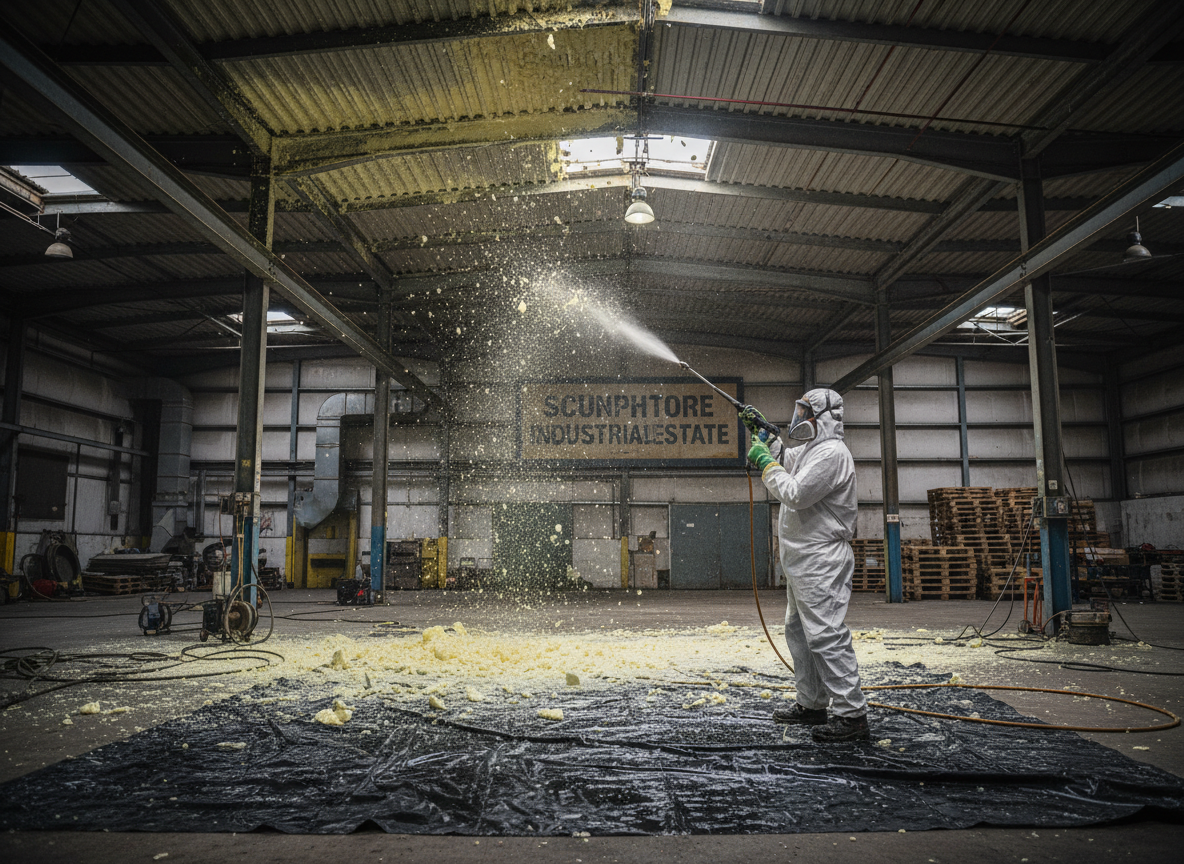
Warehouses in Scunthorpe often feature older steel-framed structures from the area's industrial heritage, where spray foam was applied to roofs and walls for insulation. Removing it requires careful cutting and scraping to avoid damaging metal sheeting or purlins, especially when foam has bonded deeply over decades. Moisture ingress from the flat roof designs common here can create hidden wet spots that complicate extraction and increase the risk of corrosion underneath.
Edge cases frequently arise in units near the old steelworks sites, where multiple foam layers were added during successive upgrades. Workers must use negative air machines and sealed containment to manage dust and debris, particularly when the foam contains older formulations that release particulates. Access via cherry pickers or scaffolding is standard because internal clearances are high and floor obstructions like racking systems limit ground-based work.
Local building practices mean many Scunthorpe warehouses have minimal ventilation, so post-removal inspection for residual adhesive and substrate condition is essential before any re-insulation. Failure to fully clear seams and junctions can lead to future condensation issues once the building returns to use. All debris is bagged on site for licensed disposal to comply with waste regulations in the region.
Technician insight
In Scunthorpe, the thing that catches most people out with Warehouse spray Foam removal is how older industrial units near the steelworks often have multiple foam layers applied over years, combined with flat roofs that trap moisture from local weather patterns and make clean separation from metal sheeting far slower than expected.
Scunthorpe Warehouse Roof Clearance
A storage unit on an industrial estate had spray foam delaminating from the roof deck after years of condensation. Inspection showed thick layers over corroding purlins and poor ventilation. We set up full containment, removed the foam in sections, cleaned adhesive residues, and confirmed the substrate was stable before handover.
How it works
- 1
Site Assessment
Inspect the warehouse interior and roof structure to map foam coverage, thickness variations, and any structural concerns.
- 2
Containment Setup
Install dust barriers and negative air filtration to protect the rest of the building and control airborne particles during removal.
- 3
Foam Extraction
Cut, scrape, and vacuum foam from walls, ceilings, and cavities using appropriate tools for the substrate type.
- 4
Clean and Inspect
Remove remaining adhesive, check for moisture or damage, and clear all debris for off-site disposal.
- 5
Final Handover
Walk through with the client to confirm clearance and discuss any follow-up requirements.
Pricing
Pricing depends on warehouse size, foam depth, and access difficulty; site visit required for accurate quote.