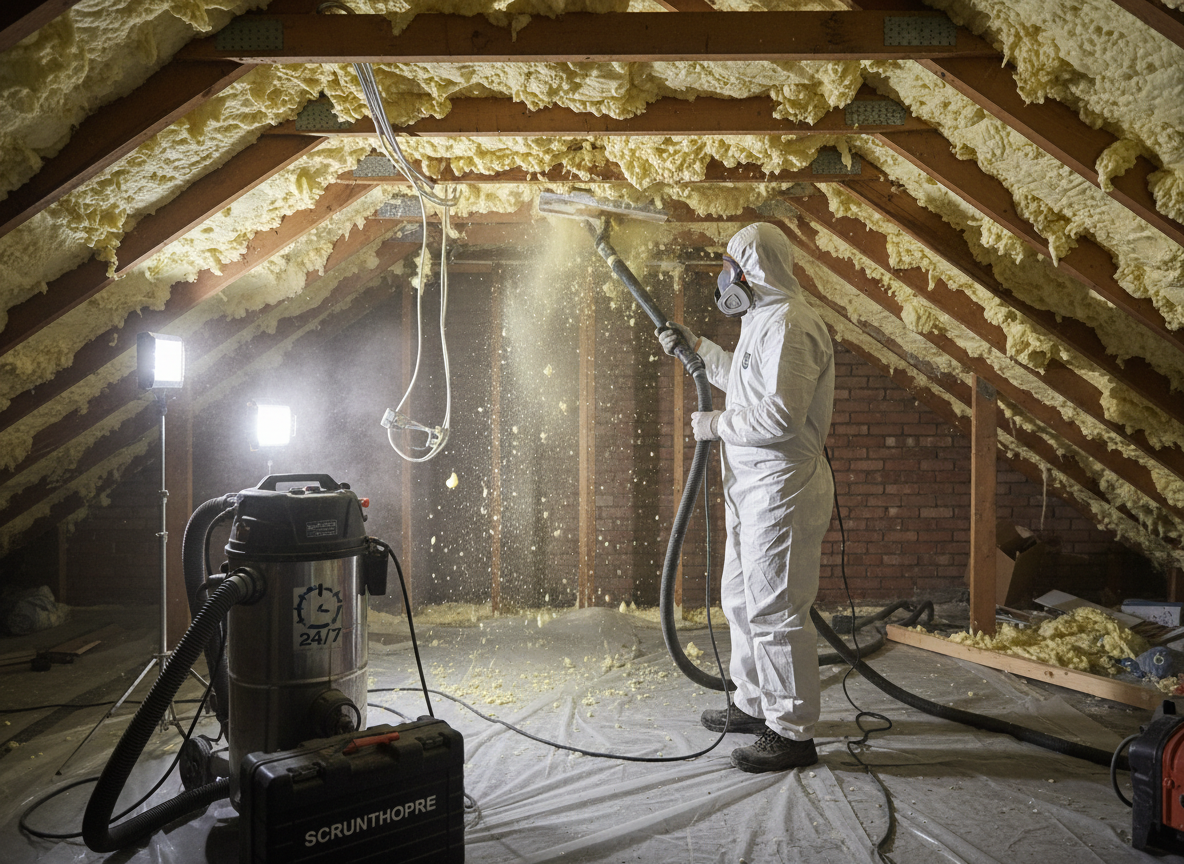
Spray foam installed in Scunthorpe lofts during the 2000s and 2010s often traps moisture against original rafters in the area's many pre-1960 terraces. Removal starts with negative-pressure containment to stop dust migrating into living spaces below, especially important in homes where the loft hatch opens directly into bedrooms. Technicians cut the foam in sections rather than scraping, reducing the risk of tearing felt or dislodging tiles on older pitched roofs common around the town centre.
Cavity wall applications in Scunthorpe's post-war semis frequently bridge the damp-proof course when the foam was injected too low. Extraction here requires drilling at multiple heights and using specialist vacuum heads to clear residue from the narrow void without damaging brickwork that has already seen decades of Lincolnshire weather cycling. Any remaining foam beads left in the cavity can hold water against the inner leaf, so thorough flushing with compressed air follows the main removal.
24-hour callouts often involve properties where foam has started breaking down after roof leaks, a frequent issue on streets exposed to the prevailing westerly winds. The team works from the address at 95 High St and can reach most Scunthorpe postcodes within the hour. Once the foam is out, the loft or cavity is left ready for new insulation or inspection by building control if the original installation bypassed ventilation requirements still enforced in the DN15 area.
Technician insight
In Scunthorpe the thing that catches most people out with 24/7 Spray Foam Removal is the older terraces off High Street where foam was pumped straight over the original lath and plaster ceiling. Once you start pulling it the plaster often comes with it, turning a simple extraction into a ceiling repair job before you can even think about new insulation.
Night callout after loft leak
Homeowner in a 1950s semi near the town centre noticed water staining through the bedroom ceiling at 2 a.m. We arrived from the High Street base, set up containment, and found the spray foam had absorbed rainwater through a slipped tile. Removing the saturated sections revealed wet rafters that needed drying time before any new insulation could go back in.
How it works
- 1
Site Assessment
Inspect loft or cavity access points, check for hidden timber damage, and map foam depth across the property.
- 2
Containment Setup
Seal rooms below with plastic sheeting and negative air machines to keep dust contained during extraction.
- 3
Foam Extraction
Cut and vacuum foam in controlled sections, clearing rafters, joists and cavity voids without disturbing original structure.
- 4
Final Clean and Handover
Flush remaining particles, remove containment, and leave the space ready for new insulation or inspection.
Pricing
Cost depends on access difficulty, foam thickness and whether cavity or loft work is required; quotes given on site after inspection.