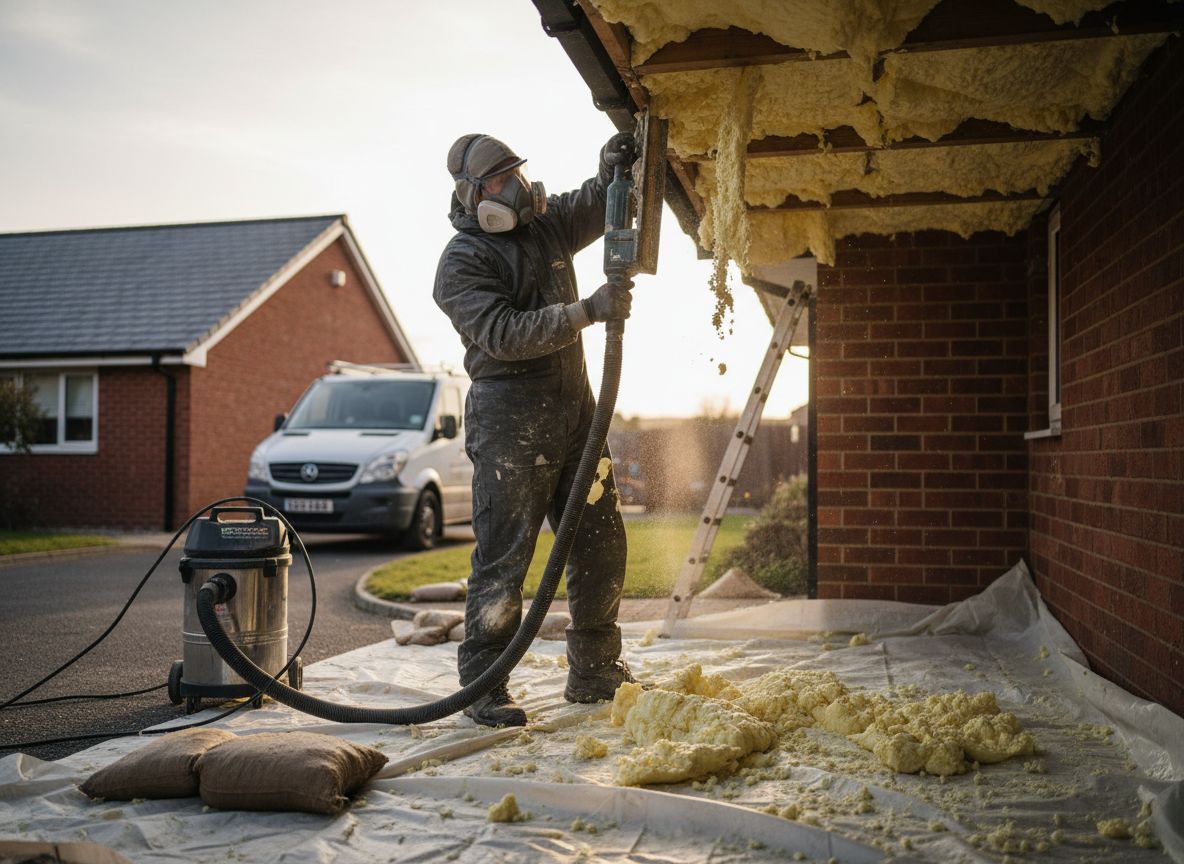
Scunthorpe's housing stock includes many 1930s to 1960s terraces and semis where spray foam was applied directly to rafters and ceilings. Once the foam degrades it traps moisture against timber and brickwork, especially during the damp winters common along the Humber estuary. Removal requires careful separation of the foam from original lath and plaster without damaging the structure underneath, followed by checking for hidden rot that only appears after the insulation is gone.
Edge cases in the DN15 and DN16 postcodes often involve foam that has expanded into electrical chases or around chimney breasts. These installations break building regulations on ventilation, and pulling the material free can release fibres that need full containment. Work in these tight roof voids demands negative air pressure setups and sequential cutting to avoid collapse of fragile ceiling boards common in Scunthorpe terraces.
Disposal follows Environment Agency rules for polyurethane waste, which cannot go into standard skips. After extraction the roof void is left ventilated and inspected for timber treatment needs before any new insulation is considered. Homeowners frequently discover that re-roofing becomes necessary once the foam is gone because original felt has deteriorated underneath.
Technician insight
In Scunthorpe, the thing that catches most people out with Spray Foam Removal near me is how the foam in 1950s brick terraces has often crept behind the fascia boards and blocked the eaves, so when you pull it you suddenly lose the only remaining airflow path and have to reopen those gaps before you leave site.
Foam Removal in DN15 Terrace
A Scunthorpe homeowner reported musty smells after heavy rain. Inspection showed spray foam had filled the eaves and trapped moisture against rafters. We removed the foam section by section, restored ventilation, and confirmed no further rot had started.
How it works
- 1
Site Survey
Measure foam depth and map access points in the roof void while checking for electrical and ventilation conflicts.
- 2
Containment Setup
Seal the work area with sheeting and negative pressure to prevent fibre migration into living spaces.
- 3
Mechanical Removal
Cut and peel foam in sections, separating it from rafters and ceilings without disturbing original fabric.
- 4
Clearance and Disposal
Bag all waste for licensed haulage and vacuum residual particles before restoring airflow.
- 5
Final Inspection
Check for hidden damp or rot and confirm the void meets current ventilation standards.
Pricing
Pricing depends on foam thickness, roof access and whether hidden timber repairs are required.