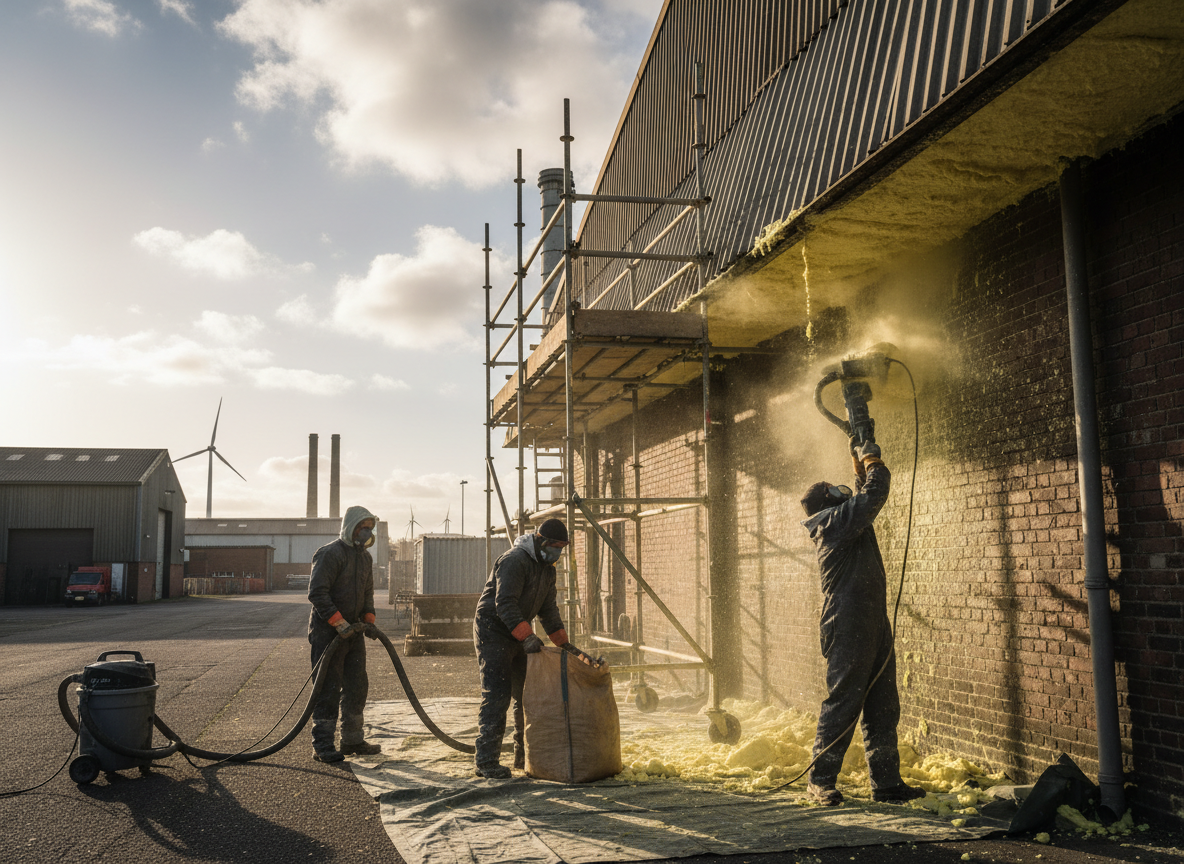
Commercial properties in Scunthorpe often feature steel-framed warehouses and older industrial units built during the town's steelmaking expansion. Removing spray foam from these structures requires careful separation from metal cladding and concrete floors without damaging load-bearing elements or releasing fibres into ventilation systems. Lincolnshire's frequent damp winters can leave foam saturated, increasing weight and complicating safe lifting during extraction.
Edge cases include foam applied over asbestos-containing materials in pre-1980s buildings near the High Street and surrounding industrial estates. Crews must test surfaces first and isolate work zones to prevent cross-contamination with neighbouring units. Local planning rules around waste disposal also require licensed carriers for the large volumes generated from commercial roofs and walls.
Work on active commercial sites means coordinating around operating hours and machinery movement. Temporary weather protection is essential because sudden rain can soak exposed insulation and create slip hazards on steel walkways common in Scunthorpe factories.
Technician insight
In Scunthorpe, the thing that catches most people out with Commercial Spray Foam Removal is how quickly damp from the Humber estuary soaks foam inside older steel sheds near the former steelworks. Once saturated it sticks hard to purlins and you end up doing twice the cutting if you don't test moisture levels first.
Warehouse Roof Extraction
A distribution unit on the edge of Scunthorpe had spray foam delaminating from its metal roof after years of condensation. We found water trapped between the foam and purlins across two bays. Sections were cut out in controlled strips, surfaces cleaned and all material removed for licensed disposal, restoring the roof to a dry, inspectable state.
How it works
- 1
Site Survey
Inspect the commercial building, identify foam locations and note access constraints around Scunthorpe industrial sites.
- 2
Containment Setup
Install dust barriers and negative air machines to protect adjacent workspaces and prevent fibre spread.
- 3
Foam Extraction
Cut and remove saturated foam sections using hand tools and mechanical lifts suited to steel and concrete structures.
- 4
Surface Cleaning
Scrape residues from metal and masonry then vacuum all debris for licensed disposal.
- 5
Final Verification
Walk the site with the client to confirm all foam is gone and areas are left safe for normal operations.
Pricing
Commercial projects are quoted after on-site inspection because building size, foam depth and access vary widely.