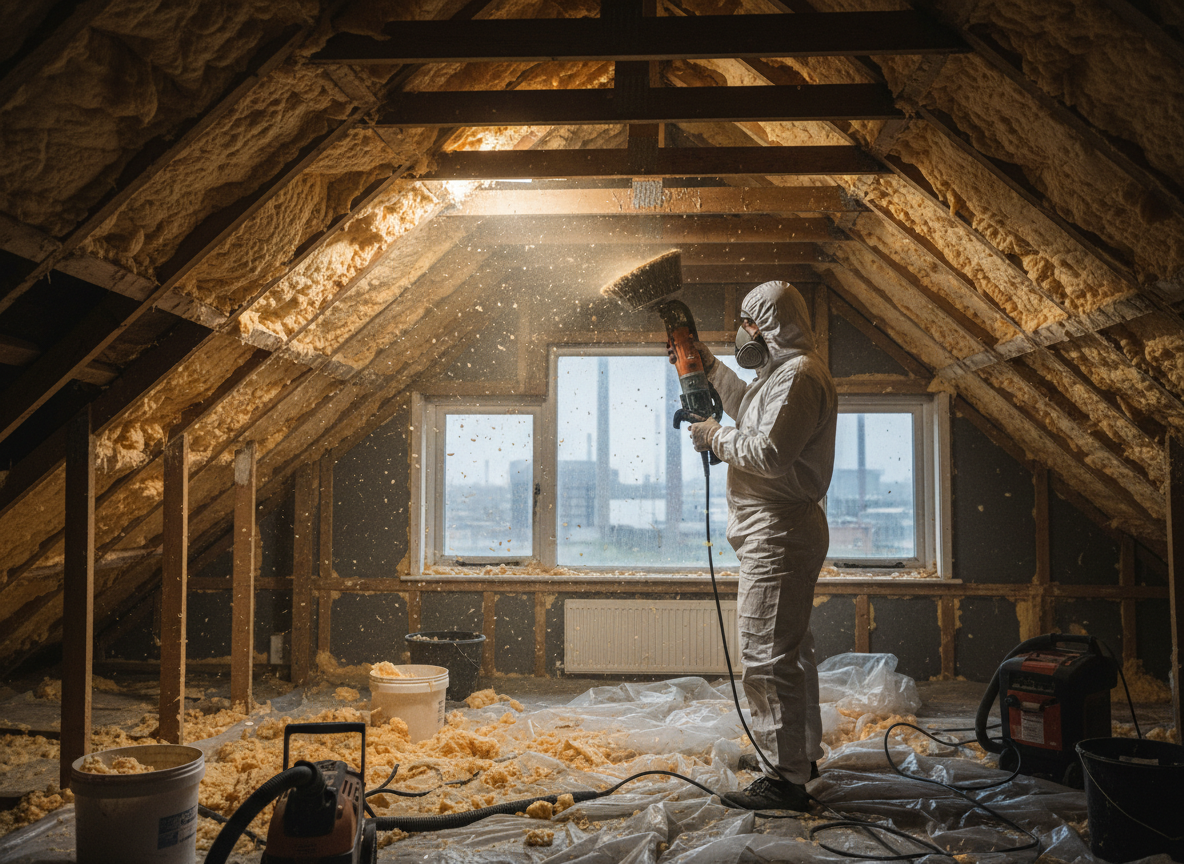
Loft spray foam in Scunthorpe properties often consists of closed-cell polyurethane applied directly to rafters and ceilings in post-war semis and Victorian terraces. Removing it requires cutting through the rigid layers without tearing felt or dislodging slate tiles common on roofs in the DN15 postcode. Damp winters in Lincolnshire can leave residual moisture trapped behind the foam, so crews must check for rot in timber before any new insulation goes in.
Homeowners in Scunthorpe frequently discover the foam has expanded into electrical cables and pipework runs, especially in 1960s council houses around the town centre. Extraction involves sectioning the material into manageable blocks, bagging it for licensed disposal, and vacuuming dust that would otherwise settle into living spaces below. Building regulations now require ventilation gaps after removal to prevent condensation in the pitched roofs typical of the area.
Edge cases include foam that has bonded to lath-and-plaster ceilings in older terraces near the High Street, where pulling too hard risks ceiling collapse. Technicians work from the loft side only, using oscillating tools and hand scraping to limit damage. After clearance, many clients request a breathable membrane upgrade suited to the frequent rainfall and wind exposure along the Humber corridor.
Technician insight
In Scunthorpe, the thing that catches most people out with loft spray foam removal is how tightly the material bonds to the underside of slate roofs in the older terraces around Frodingham Road. Once winter temperatures drop and any trapped moisture freezes, the foam becomes even more brittle and fragments everywhere during extraction, so we always allow extra time for thorough vacuuming in those houses.
Scunthorpe Semi Loft Clearance
Homeowner in a 1970s semi near the town centre reported musty smells after heavy rain. Inspection showed closed-cell foam had trapped moisture against the rafters. We sectioned and removed the foam over two days, ventilated the roof space, and confirmed no rot before leaving the loft clear for new insulation.
How it works
- 1
Initial Loft Inspection
Assess foam depth, roof condition, and any hidden services from the access hatch in Scunthorpe properties.
- 2
Containment Setup
Seal the loft hatch and protect lower floors from dust before cutting begins.
- 3
Foam Sectioning and Removal
Cut and bag the polyurethane in controlled sections to avoid spreading debris.
- 4
Clean and Ventilate
Vacuum residues, check for moisture damage, and ensure proper roof ventilation before handover.
Pricing
Cost varies with loft size, foam thickness, and access difficulty; quotes provided after inspection.