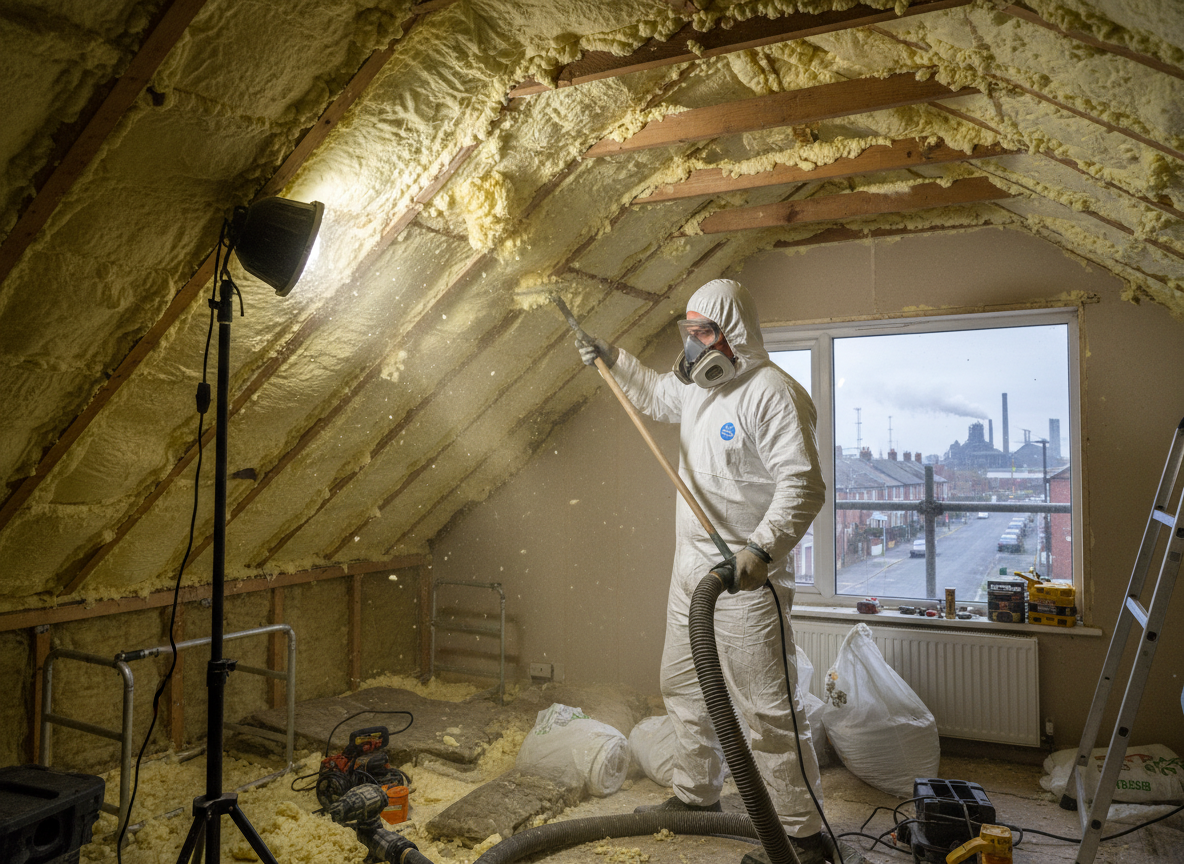
Thermal spray foam removal in Scunthorpe properties often involves older terraced and semi-detached houses built between the 1930s and 1970s where closed-cell foam was injected into cavity walls or laid across lofts. The foam bonds tightly to brick and timber, so crews must cut it into sections and peel it back without damaging underlying plaster or joists. In the DN15 area many homes sit on clay soils that hold moisture, making the foam more brittle in winter and stickier during summer humidity, which changes how quickly sections release from the substrate.
Edge cases appear regularly around Scunthorpe when foam has been applied over electrical cables or near chimney breasts. Removing it requires isolating circuits first and using low-heat tools to avoid melting wires or releasing fumes into living spaces. Lincolnshire building control expects waste to be bagged and taken to licensed disposal sites rather than left on site, and crews must document the condition of any vapour barriers that were compromised during the original install.
Homeowners in Scunthorpe sometimes discover the foam has trapped condensation against external walls, especially on north-facing elevations near the steelworks. Proper removal includes checking for mould growth behind the foam and advising on ventilation upgrades before any new insulation is considered. The work is dusty and requires full-face respirators plus negative-air machines to keep particles out of occupied rooms.
Technician insight
In Scunthorpe the thing that catches most people out with thermal spray foam removal is how the clay soil around older terraces on the east side of town keeps walls damper than expected. Foam that looks solid from inside often stays glued to the brick until you cut it, then it pulls render off with it. We always check the north elevations first because that is where the condensation trap is worst.
Loft foam removal after failed re-roof
Homeowner in a 1960s semi on the edge of Scunthorpe noticed damp patches on bedroom ceilings after new tiles were fitted. We found closed-cell foam still bonded to the rafters and trapping moisture against the old felt. After isolating the lighting circuit we cut the foam into strips, removed it without disturbing the new felt, and left the loft ventilated. The ceiling dried out within three weeks.
How it works
- 1
Site Survey
Walk-through of loft or cavity access points to measure foam depth and check for hidden services.
- 2
Isolation and Containment
Switch off relevant electrics, seal rooms with plastic sheeting and set up extraction.
- 3
Sectional Removal
Cut foam into manageable pieces, peel from substrate and bag for licensed disposal.
- 4
Final Clean and Inspection
Vacuum residue, check for remaining material and note any repairs needed before handover.
Pricing
Pricing depends on access, foam thickness and whether cavities or lofts are involved; site visit required for accurate quote.