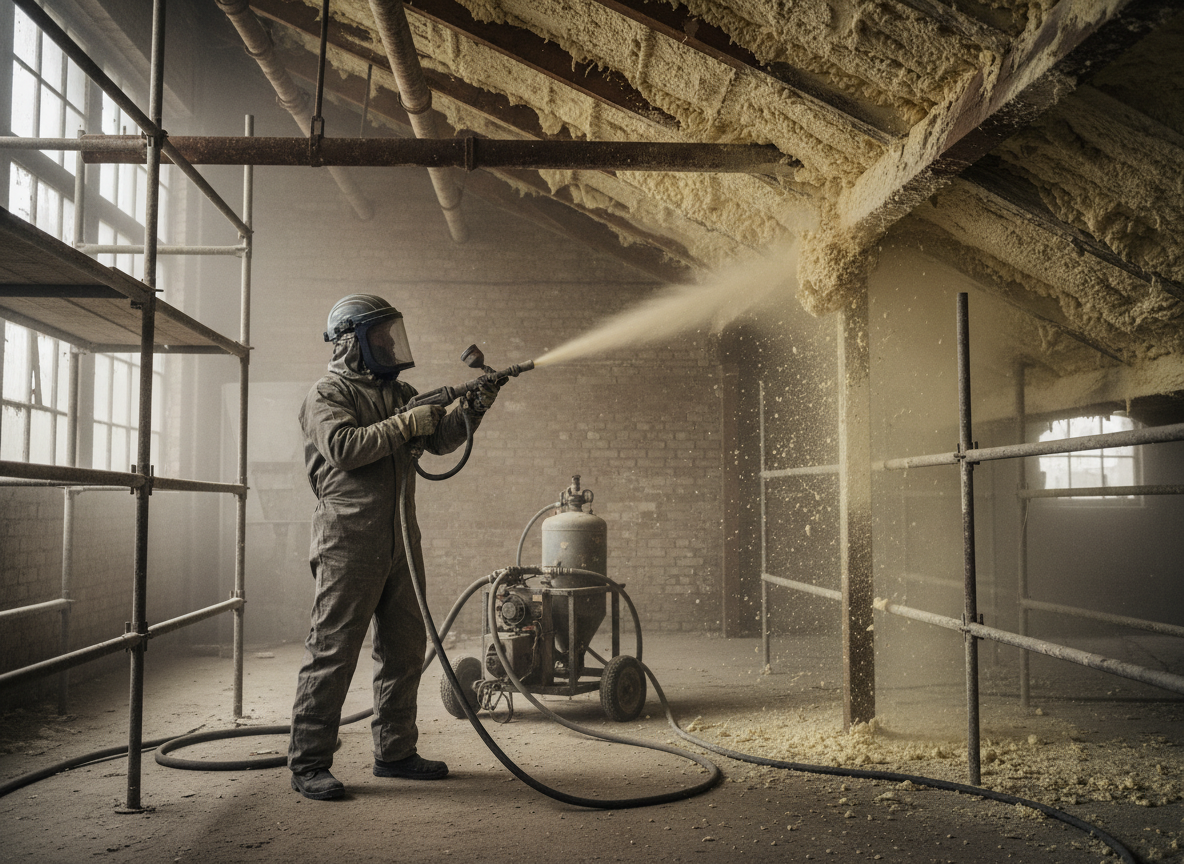
Sand blasting spray foam insulation removal requires controlled abrasive media to strip polyurethane layers without damaging underlying brick or timber in Scunthorpe homes. Older post-war terraces common around the town centre often have foam injected into cavity walls during the 1970s and 1980s energy drives, leaving residue that traps moisture against the inner leaf. Operators must monitor dust extraction closely because Lincolnshire's frequent damp winters allow hidden condensation pockets to form once the foam is disturbed.
Edge cases arise in properties near the steelworks where vibration from heavy traffic has loosened mortar joints, making high-pressure blasting risky without first stabilising the substrate. UK Building Regulations note that any removal disturbing insulation in cavity walls must avoid bridging damp-proof courses, a frequent issue in Scunthorpe's Victorian terraces that have been re-rendered over time. Technicians check for asbestos in artex ceilings or pipe lagging before starting because many DN15 postcodes contain original 1960s materials that complicate access.
Homeowners in Ashby and Crosby regularly discover foam has expanded into roof voids and electrical chases, requiring staged removal to prevent debris falling into live wiring. The process leaves surfaces ready for re-insulation but demands thorough ventilation because residual isocyanate particles linger in enclosed spaces during colder months when windows stay shut.
Technician insight
In Scunthorpe, the thing that catches most people out with sand blasting spray foam insulation removal is the way 1960s cavity-filled terraces around the High Street trap moisture behind the foam once winter temperatures drop, so the job always starts with checking for hidden damp before any blasting begins.
Crosby Terrace Foam Extraction
Homeowner reported musty smells and cold spots in a 1970s terrace. Inspection found foam had bridged the damp course and trapped condensation. Sand blasting cleared the material in staged passes while protecting original brickwork. Property was left dry and ready for new insulation with no further moisture issues.
How it works
- 1
Site Assessment
Inspect foam depth, substrate condition and access points in the Scunthorpe property while noting any damp or wiring issues.
- 2
Containment Setup
Erect dust barriers and negative air machines to protect living areas from abrasive media and foam particles.
- 3
Abrasive Removal
Apply calibrated sand blasting to strip foam layers, adjusting pressure for brick or timber surfaces typical in Lincolnshire terraces.
- 4
Debris Clearance and Final Check
Vacuum residues, inspect for remaining material and confirm the substrate is clean before handover.
Pricing
Upfront quotes after inspection; final cost depends on foam thickness, access difficulty and property size.