Spray foam removal in Scunthorpe often involves older terraced and semi-detached properties built during the town's steel industry expansion. These homes frequently have cavity walls where closed-cell foam was injected decades ago, trapping moisture against brickwork that already faces damp from the flat local terrain and proximity to the Humber estuary. Extraction requires cutting access points without damaging original masonry, then using negative-pressure equipment to pull foam fragments out while containing dust that can otherwise settle into neighbouring properties along narrow streets like those near the High Street.
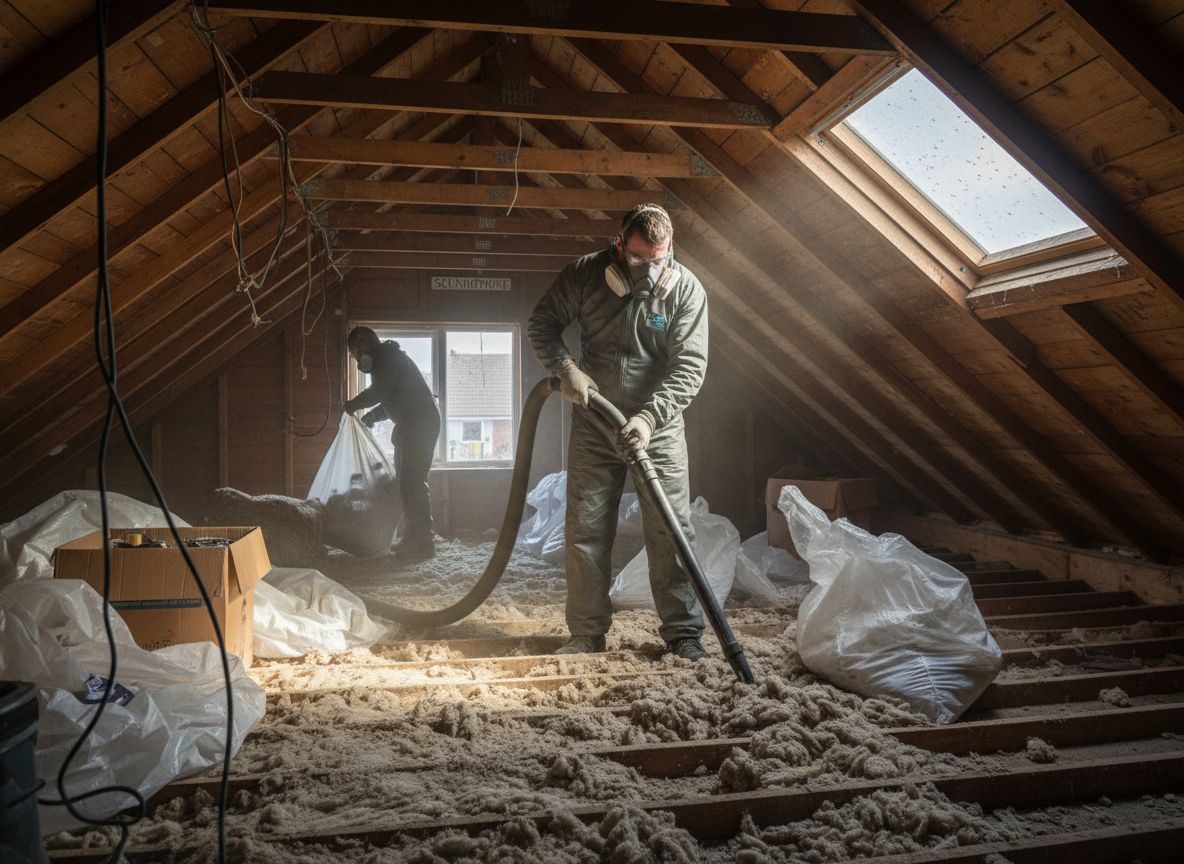
Edge cases appear regularly in loft conversions around Crosby and Ashby, where open-cell foam was applied directly to rafters without vapour barriers. Winter temperature swings cause the foam to shrink and crack, allowing condensation to drip onto ceilings. Removal here means working around electrical cabling and pipework that older installations rarely protected, followed by thorough cleaning of timber to prevent rot before any new insulation goes in. Homeowners often discover the foam has bonded to asbestos-containing materials in ceilings, requiring careful testing before any mechanical removal starts.
Regulation compliance matters because many Scunthorpe properties sit within conservation areas or have had previous energy grants. Foam removal can affect a building's thermal performance rating, so documentation of the work and reinstatement materials is essential. We always check for proper ventilation upgrades post-removal, especially in properties near the railway line where airflow is already restricted by surrounding buildings.
Technician insight
In Scunthorpe, the thing that catches most people out with insulation removal service is how the older terraced stock around the former steelworks sites has foam that bonded directly to single-skin brickwork, so any winter damp from the estuary pulls straight through once the foam is gone and owners skip the ventilation fix.
Cavity Wall Extraction in Ashby
Homeowner noticed black mould along internal walls after heavy autumn rain. Inspection showed closed-cell foam had failed in the cavity of a 1930s terrace. We cut access slots, extracted the foam under negative pressure, cleaned the brick, and advised on new vents to restore airflow before winter set in.
How it works
- 1
Initial Inspection
Visit the property in Scunthorpe to assess foam type, location, and any moisture damage in cavities or lofts.
- 2
Access and Containment
Create controlled entry points and set up dust extraction to protect the rest of the home and adjacent buildings.
- 3
Foam Extraction
Mechanically remove the spray foam while monitoring for hidden wiring, pipework, or hazardous materials common in local housing stock.
- 4
Site Clean and Reinstatement
Clear all debris, clean surfaces, and advise on ventilation or repairs needed before new insulation can be considered.
Pricing
Upfront quotes after inspection, with final cost based on property access, foam depth, and any additional containment required.