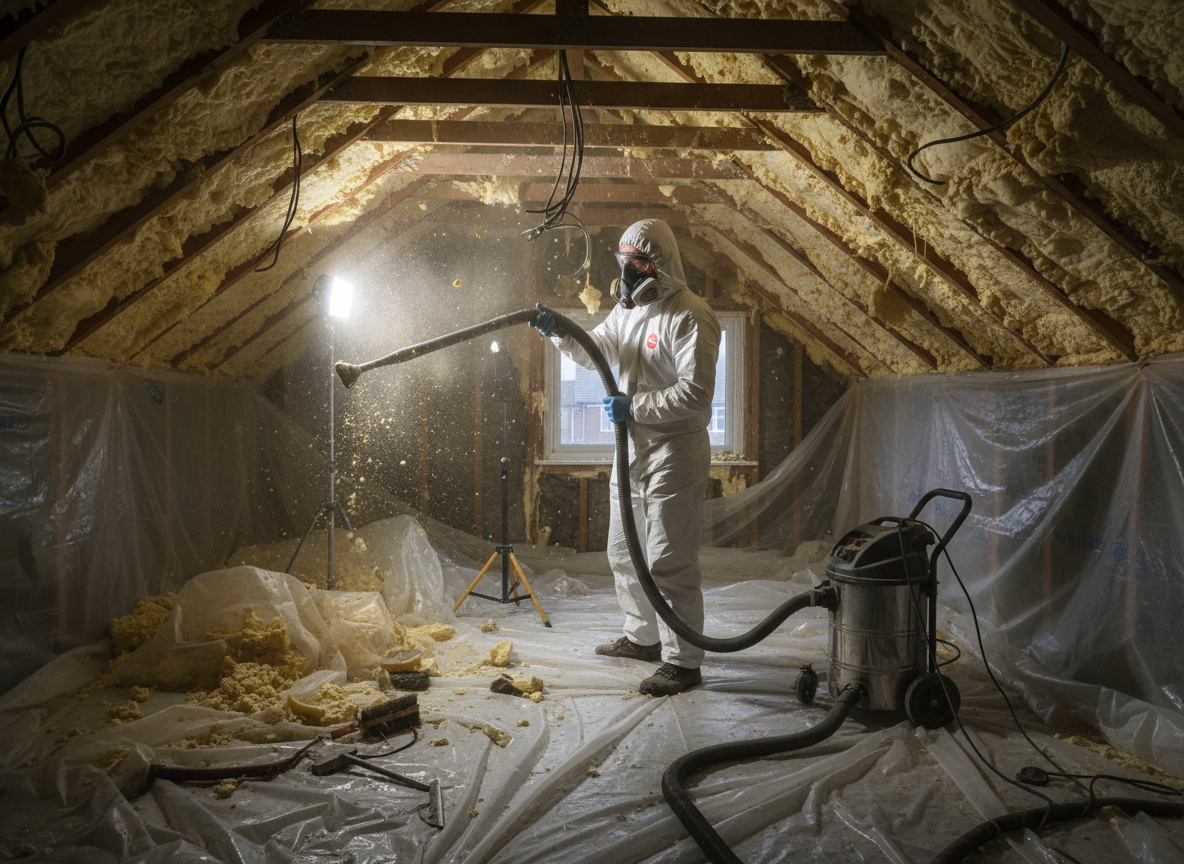
Attic spray foam removal in Scunthorpe often involves older terraced and semi-detached homes built before the 1970s where closed-cell foam was applied directly over original ceilings. These properties around the town centre and estates near the steelworks frequently show foam trapping condensation from the region's damp winters, leading to hidden rot in timber joists. Removal requires careful cutting and vacuum extraction to avoid disturbing asbestos-laced insulation common in post-war builds without damaging the underlying lath and plaster.
Scunthorpe's flat terrain and heavy clay soils mean many attics suffer poor ventilation, allowing moisture to linger after foam installation. Technicians must inspect for water ingress points around chimneys and roof valleys before starting, as sudden temperature drops in winter can turn residual foam into a brittle mess that crumbles into living spaces below. Proper containment sheeting and negative air machines prevent dust migration into bedrooms on the floors beneath.
Homeowners in DN15 postcodes sometimes discover foam was added over electrical cables or pipework during earlier energy upgrades. Extraction teams isolate these services first, then peel foam in sections to check for corrosion. The process leaves the attic ready for traditional mineral wool or sheep's wool insulation that suits the area's variable rainfall and avoids the sealed-box problems spray foam creates in Lincolnshire lofts.
Final clearance includes HEPA vacuuming of all surfaces and disposal of foam waste at licensed sites. This step matters because Scunthorpe properties near former industrial sites can have stricter waste handling rules tied to local authority guidelines.
Technician insight
In Scunthorpe, the thing that catches most people out with attic spray foam removal is the older terraced stock around the High Street where foam was sprayed straight onto lath and plaster; winter damp then sits trapped against the timbers and you only find the rot once the foam comes off.
Terraced Home Near Town Centre
Homeowner in a 1930s terrace reported musty smells after heavy rain. Inspection found closed-cell foam holding moisture against joists above the kitchen. Crew removed foam in sections, dried the timber, and cleared all debris without disturbing original ceilings. Attic now ventilates properly.
How it works
- 1
Initial Inspection
Survey the attic for foam depth, underlying ceiling condition, and any hidden services in Scunthorpe homes.
- 2
Containment Setup
Install sheeting and negative air units to protect living areas from dust during removal.
- 3
Foam Extraction
Cut and vacuum foam in controlled sections while checking for moisture damage in joists.
- 4
Clearance and Disposal
HEPA clean all surfaces and remove waste following local Lincolnshire disposal rules.
Pricing
Costs depend on attic size, foam thickness, and access difficulty in Scunthorpe properties; upfront quotes provided after inspection.